ServicesStorm Doors
Storm Doors in Normandy Park
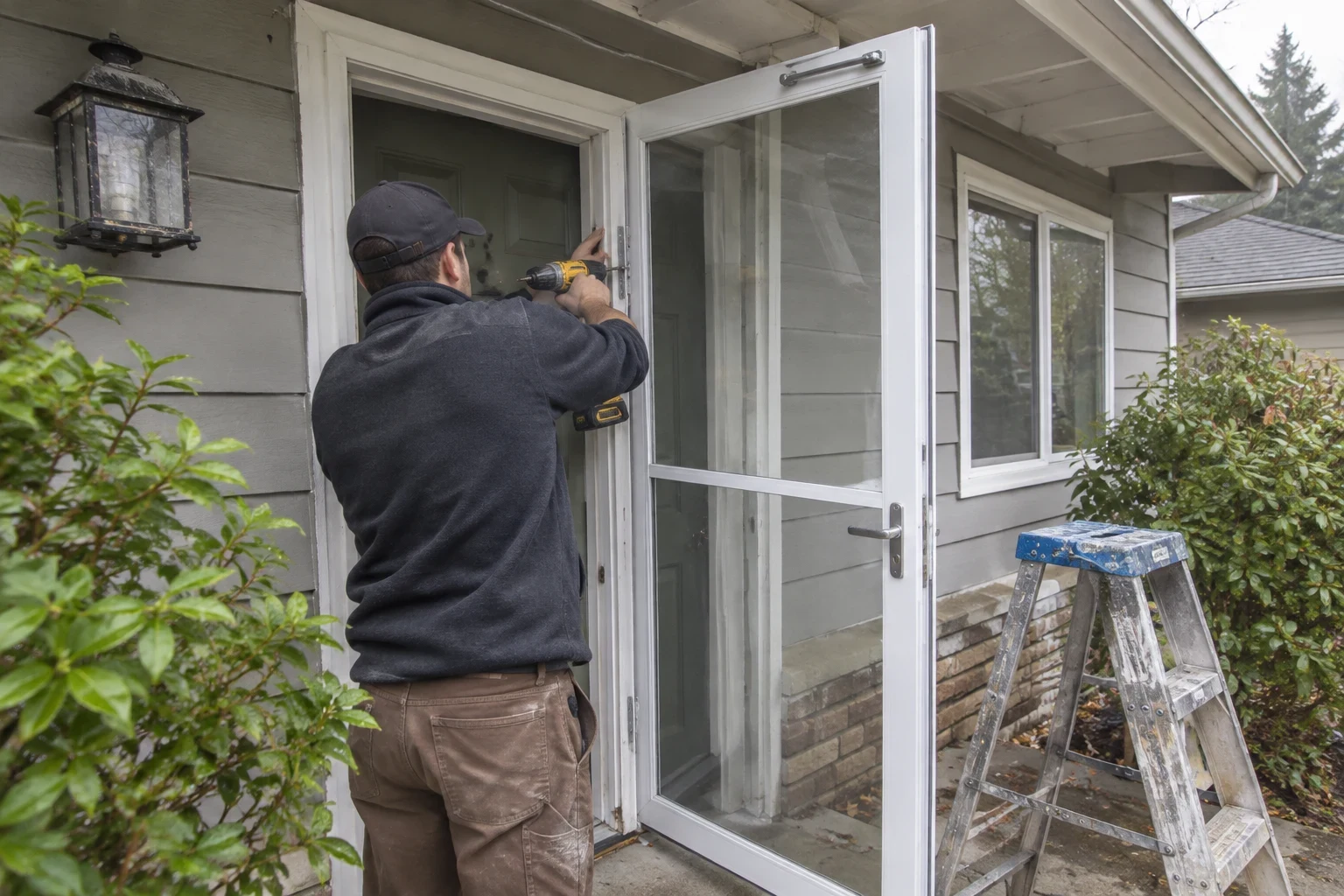
A good storm door adds a second barrier in front of your entry door. It cuts drafts, keeps wind-driven rain off the door you already own and lets you open things up on a nice day without letting bugs in. We measure, install and adjust it so it closes right.
Why Put a Second Door Out Front
Picture a glass and screen panel mounted outside your main front door. That is a storm door. The space between it and your entry door holds a layer of air that barely moves, and that layer slows down the cold that leaks in around an older door. The entry stays warmer, and your furnace kicks on a bit less often.
The storm door also takes the beating from the weather so your front door doesn't have to. Rain and wind, month after month, wear down paint and stain and soak the bottom edge of a wood door. Behind a storm door, that finish holds up longer and the bottom stays dry.
One thing a storm door can't do is save an entry door that is rotted through or badly warped. If we see that, we'll say so plainly. That work is covered on our entry doors page.
Part of Every Storm Door We Hang
Checking the opening at several points
One tape reading is not enough. We take the width and height top, middle and bottom, because older frames are often out of square. A door hung in a crooked opening rubs, drags and lets air slip past.
Taking off the old door
Got an old storm door? We remove it, pull the leftover screws and take it with us when we leave. Nothing ends up propped against your garage wall.
Setting the frame and sweep
The frame goes on snug against the trim, and the bottom sweep gets set to press against the threshold. Most of the draft blocking happens right here, so we take our time with it.
Closer, chain and latch
We tune the closer so the door pulls shut firmly but doesn't bang. The wind chain gets set so a gust can't yank the door wide. Then we make sure the latch and lock meet cleanly.
Picking glass and screen
You can go with full-view glass, a screen that rolls up out of sight or panels you change out by season. We'll help you choose based on how you actually use the door.
Leaving it clean
Screws, cardboard and wrapping all get picked up, and the step gets swept. The only change you should notice is the new door.
Signs It's Time for a New Storm Door
You feel a draft at the front door
If cold air hits your ankles near the entry, the main door is leaking. A storm door with a good sweep helps block it.
The old one won't latch
A storm door that bounces open, sags or needs a shove to close has a worn closer or a bent frame. Past a point, replacing it costs less than chasing parts.
Your front door finish is peeling
Peeling paint, gray wood or swelling at the bottom means rain is reaching the door. A storm door keeps the worst of it off.
Torn screen or cracked glass
Sometimes a panel is all you need. If the frame is also damaged, a full replacement makes more sense.
You want air without bugs
On a warm evening, a screened storm door lets you leave the front door open and move air through the house without running a fan.
How a Storm Door Job Goes
- 1
Phone call and free quote
Call us and tell us about the door. We set a time to come look, measure and talk through styles. The quote is free and there is no pressure to buy.
- 2
Measure and order
We confirm sizes and the swing direction, and check the trim the door will mount to. If the trim is soft, we point it out before anything is ordered.
- 3
Install day
Most installs are finished in a single day. We take off the old door, square up the new frame, hang the door and fit the sweep.
- 4
Adjust and walk through
We open and close it with you, set the closer speed and show you how the screen or glass panels work. Then we clean up and head out.
What Moves the Price of a Storm Door
Storm doors cover a wide range, from basic models to heavy full-view doors with special glass. We price your door after we have seen the opening and you have picked a style. You get the number on the phone or at the visit, and we offer flexible payment options if that helps.
- Door style
- A simple ventilating door costs less than a full-view door or one with a built-in retractable screen.
- Glass type
- Low-E glass reflects heat and helps more with comfort, but it adds to the cost. Standard tempered glass is the starting point.
- Opening size and shape
- Standard openings take stock doors. Odd sizes or badly out-of-square frames may need a custom order or extra fitting time.
- Trim condition
- If the wood the frame screws into is rotted, it needs repair first so the door holds and seals.
- Hardware
- Handle finish, keyed deadbolts and heavier closers each change the total a bit.
Storm Door Questions
Something not covered here? (206) 984-4841
Does a storm door actually save on heating?
It helps most when your entry door is older or drafty. The trapped air between the two doors slows heat loss and stops a lot of drafts. On a new, well-sealed entry door the savings are smaller, and we will say so.
Can a storm door hurt my front door in the sun?
It can. On a door that gets strong afternoon sun, heat can build up between the doors and damage some finishes. We look at which way the door faces and may suggest low-E glass or a door you can vent with a screen in summer.
What happens if the glass breaks?
Our storm doors are covered by a glass break warranty. We explain what it covers when we give you your quote, so you know before you decide.
Can you put a storm door on any entry door?
Most entry doors can take one. We need enough flat trim around the opening to mount the frame, and the handle on the main door has to clear the storm door glass. We check both at the visit.
Do I need to be home on install day?
It helps if someone is there at the start and the end. We want to confirm the swing direction before we drill, and walk you through the closer and lock when we finish.
Ready for a Warmer Front Entry
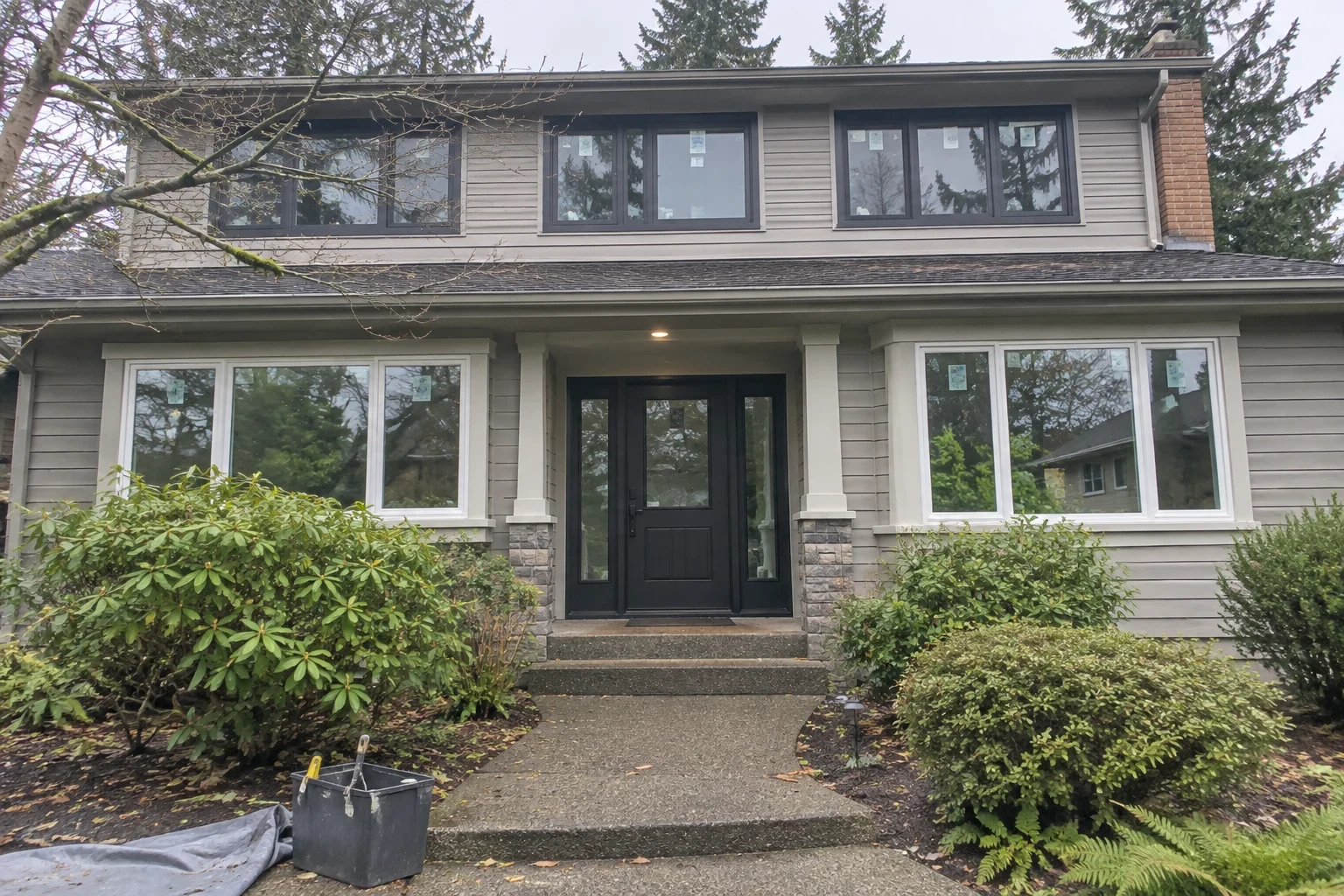
Tell us about your door and we will come out, measure and give you a clear price. If a storm door isn't the right fix, we'll tell you that too.